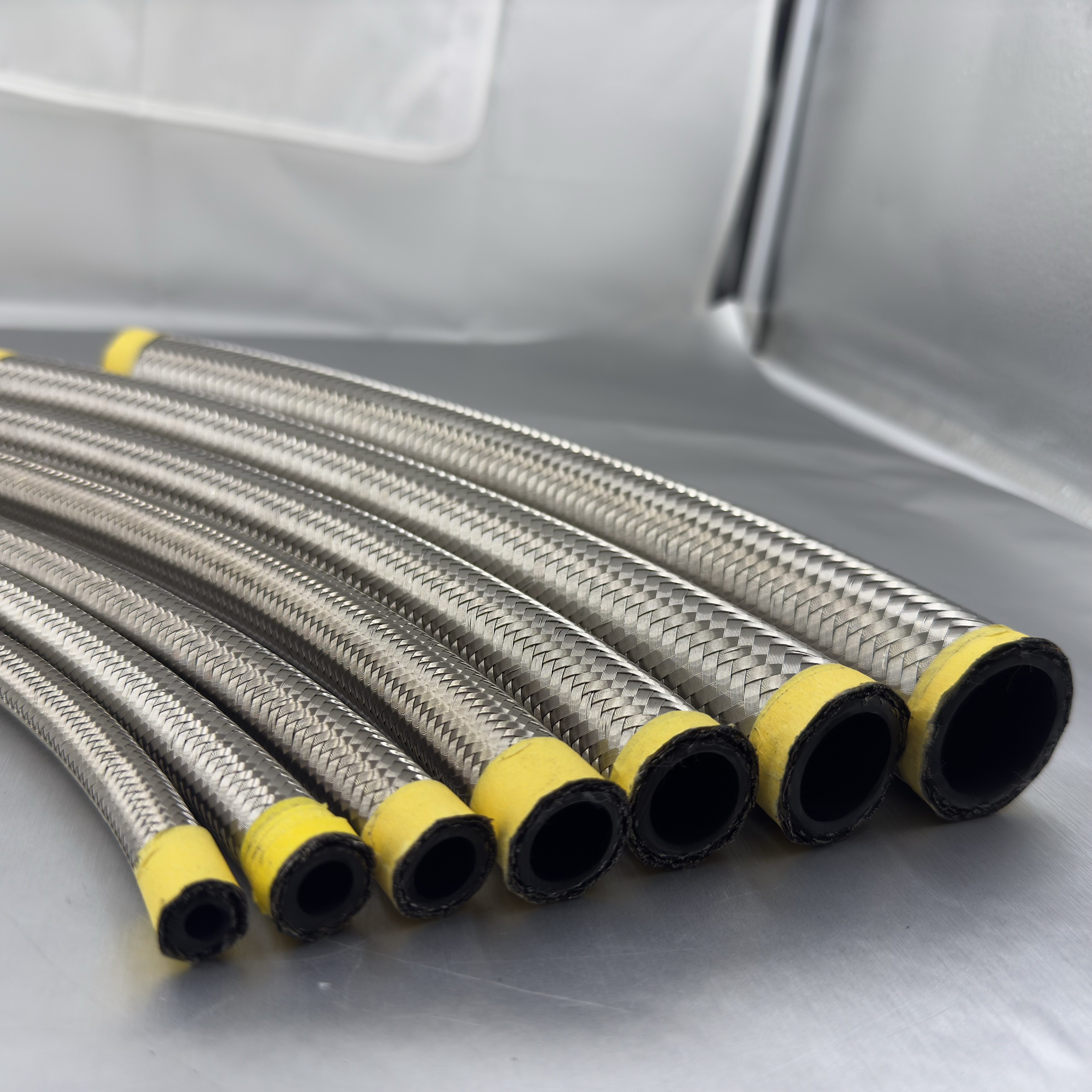
Selecting the right braided hose for your industrial application requires more than just matching dimensions and pressure ratings. Compliance with recognized industry certifications and standards is critical to ensure safety, reliability, and regulatory adherence. Whether you are sourcing a braided brake hose for automotive systems, a stainless steel braided hose for corrosive environments, or a braided hydraulic hose for high-pressure fluid transfer, understanding which certifications apply to your specific use case protects both your operations and your end users.
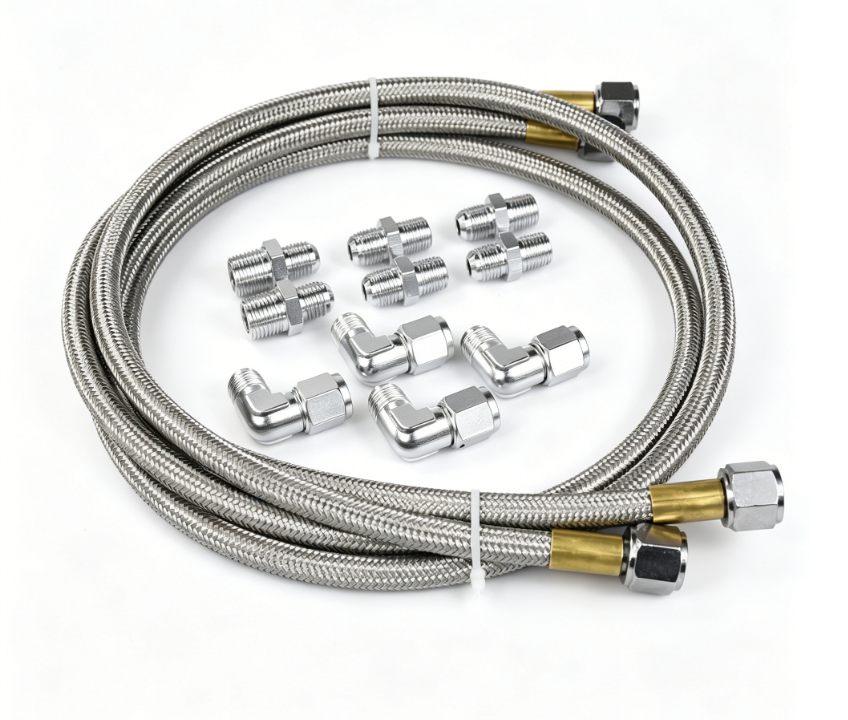
Industrial hoses are subject to demanding performance conditions and regulatory frameworks that vary by industry, geography, and application. Certification bodies worldwide have established strict testing protocols and material specifications to guarantee that hoses can withstand pressure cycles, temperature extremes, chemical exposure, and mechanical stress without failure. This article explores the key certifications that braided hoses must meet, helping procurement teams, engineers, and facility managers make informed decisions when selecting hoses for critical operations.
Automotive and Brake System Certifications
SAE and DOT Standards for Brake Hoses
The braided brake hose used in automotive braking systems must comply with rigorous standards established by the Society of Automotive Engineers (SAE) and the U.S. Department of Transportation (DOT). SAE J343 defines the performance requirements for automotive brake hose assemblies, including burst pressure, hoop stress, and aging resistance. DOT FMVSS 571.106 mandates that brake hoses meet specific safety performance criteria to prevent brake fluid leakage and system failure under normal and emergency braking scenarios. These standards require hoses to maintain flexibility, resist degradation from brake fluid exposure, and perform reliably across temperature ranges from -40°C to +120°C.
ISO 1402 and International Brake Hose Requirements
For markets outside North America, the ISO 1402 standard specifies the technical requirements for compact hoses used in automotive brake systems. This international standard ensures that a braided brake hose meets consistent performance criteria regardless of manufacturer or origin. The ISO standard covers hose dimensions, pressure ratings, kink resistance, and compatibility with various brake fluids. Manufacturers producing brake hoses for export to Europe, Asia-Pacific, and other regions must achieve ISO 1402 certification to gain market access and demonstrate compliance with regional automotive safety requirements.
Hydraulic System Certifications and Performance Standards
ISO 1402 and EN Standards for Hydraulic Hoses
Industrial braided hydraulic hose applications require certification under ISO standards that cover hose performance in high-pressure fluid systems. ISO 1402 applies to compact hoses in mobile and stationary hydraulic systems, defining burst pressures, minimum bend radii, and temperature operating ranges. ISO 6803 and ISO 12151 address spiral and compact hoses used in severe duty environments, ensuring that the braided hydraulic hose maintains structural integrity under cyclic pressure loading. EN 853 standards, widely adopted in Europe, specify requirements for reinforced hoses used in hydraulic power transmission, with strict testing for pressure cycling, impulse endurance, and resistance to abrasion.
ASTM Standards for Hydraulic Performance
The American Society for Testing and Materials (ASTM) publishes comprehensive standards for hydraulic hoses used in industrial machinery and equipment. ASTM D3481 covers the hose and hose assemblies used in hydraulic systems, detailing material requirements, pressure classes, and performance testing protocols. These standards ensure that your braided hydraulic hose can withstand pressure spikes, thermal cycling, and contamination exposure without degradation. Compliance with ASTM standards is particularly important for applications in agriculture, construction, mining, and manufacturing industries where system downtime creates significant operational and financial risk.
Material and Environmental Certifications for Specialized Applications
Stainless Steel Braided Hose Certifications
A stainless steel braided hose designed for corrosive or food-grade applications must meet additional material and hygiene certifications. ASTM A276 and ASTM A688 establish the standards for stainless steel bars and tubing used in hose construction, ensuring that the braiding material resists corrosion and maintains mechanical properties over extended service life. For food and beverage applications, 3A and NSF certifications confirm that the stainless steel braided hose meets sanitary design requirements and does not introduce contaminants into products or processes. Pharmaceutical and biotechnology industries require certifications confirming compatibility with cleaning agents, steam sterilization, and aggressive chemical environments.
FDA and Food-Contact Certifications
In food, beverage, and pharmaceutical industries, hoses must comply with FDA regulations and European Food Contact Material Directive requirements. These certifications confirm that hose materials do not leach harmful substances into products and that the hose assembly maintains integrity during high-temperature pasteurization, sterilization, and cleaning cycles. A stainless steel braided hose bearing FDA compliance certification provides assurance to manufacturers and end consumers that the product meets the strictest health and safety standards. Such certification is mandatory for hoses used in milk processing, beverage packaging, pharmaceutical production, and cosmetics manufacturing.
Pressure and Safety Certifications
Pressure Equipment Directive (PED) Compliance
Across Europe, hoses and pressure equipment assemblies must comply with the Pressure Equipment Directive (PED), which sets mandatory safety standards for vessels and piping systems rated above 0.5 liters times bar (L·bar). A braided hydraulic hose assembly operating in the European Union must carry PED certification and CE marking, confirming that the product has undergone conformity assessment and meets all applicable safety requirements. Manufacturers must document design calculations, material certifications, and test reports demonstrating that the hose meets PED Category III or IV requirements depending on the pressure and hazard classification of the intended application.
ASME and Boiler Code Compliance
In North America, hoses used in high-pressure systems and stationary equipment often must comply with ASME Boiler and Pressure Vessel Code standards. The braided brake hose or braided hydraulic hose used in industrial equipment may require ASME certification to satisfy local regulatory requirements and insurance underwriting criteria. These standards ensure that hose assemblies are designed, manufactured, inspected, and tested according to rigorous engineering principles and safety margins that protect workers and facilities from catastrophic failure risks.
FAQ
Which certifications are mandatory for automotive brake hoses?
Automotive brake hoses must comply with SAE J343 and DOT FMVSS 571.106 in North America, or ISO 1402 for international markets. These certifications ensure that the braided brake hose maintains pressure integrity, resists fluid degradation, and performs reliably across extreme temperature ranges. Manufacturers must pass burst pressure testing, thermal cycling tests, and compatibility assessments with standard brake fluids before achieving certification.
What certifications apply to stainless steel braided hoses in food processing?
A stainless steel braided hose used in food processing must meet 3A, NSF, and FDA certifications, confirming sanitary design and material safety. These certifications verify that the hose does not introduce contaminants, withstands high-temperature sterilization, and remains compatible with cleaning agents and food products. ASTM A276 material certification ensures the braiding material resists corrosion and maintains mechanical integrity in demanding hygiene environments.
Are PED and ASME certifications required for all braided hydraulic hoses?
PED certification is mandatory for braided hydraulic hose assemblies operating in European Union applications, while ASME compliance applies to North American stationary equipment subject to pressure vessel regulations. The specific certification requirement depends on the application, operating pressure, installation location, and regulatory jurisdiction. Consult local regulations and equipment manufacturers to determine which certifications your braided hydraulic hose must carry for compliance and insurability.
 EN