EN

flanged-ptfe-lined-metal-hose--ss304-braided-welded-flange-corrosion-resistant-industrial-hose, flanged-ptfe-lined-metal-hose--ss304-braided-welded-flange-corrosion-resistant-industrial-hose, /ptfe-braided-hose
EN
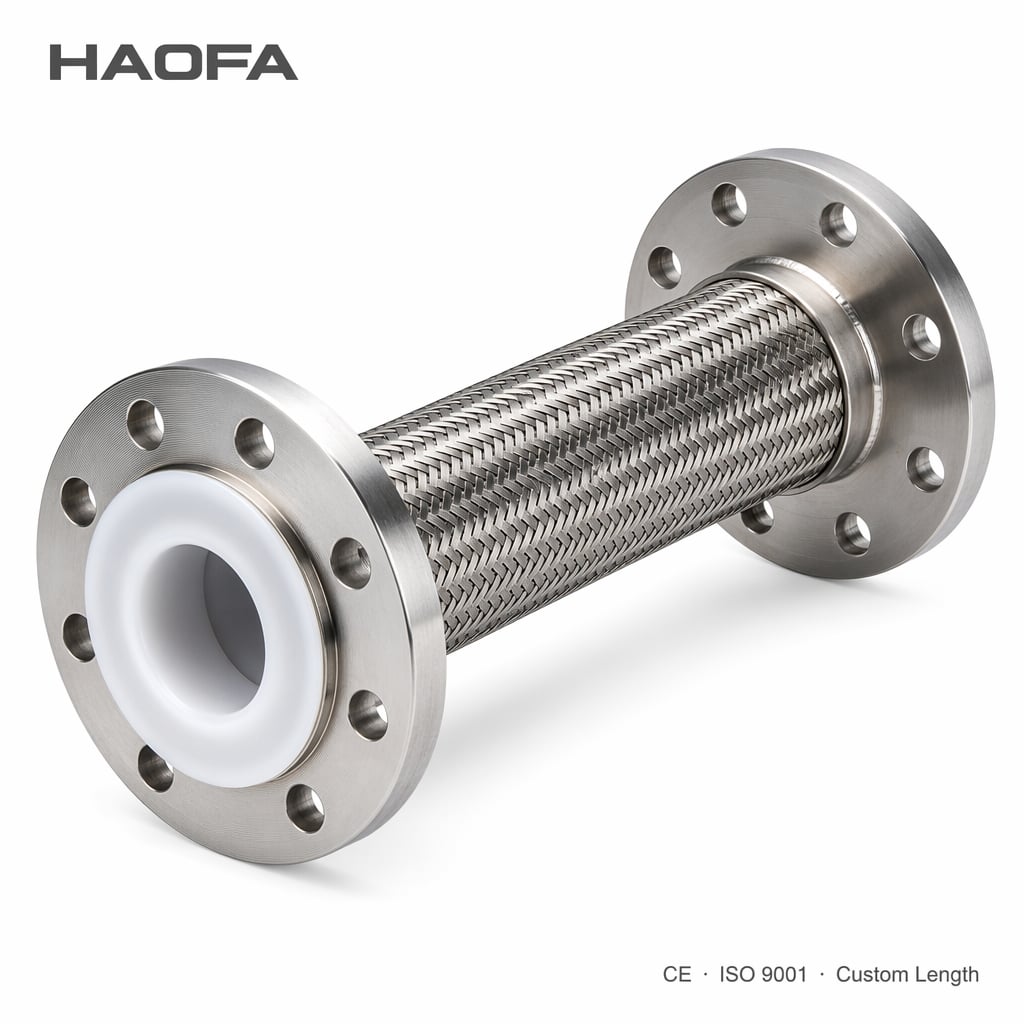
PTFE inner liner + 304 stainless steel wire braid + carbon steel welded flange, finished with a heat-formed PTFE flare seal face — full in-house process control from raw PTFE to finished assembly.
When designing a fluid transfer system for aggressive chemical media, PTFE lined metal hose is one of those material specifications with real consequences for chemical compatibility, pressure resistance, and long-term service life. Selecting the correct liner material determines reliability — a rubber or NBR inner layer may meet the pressure specification while gradually degrading under continuous chemical exposure, a failure mode that typically only becomes visible after months in service.
This flanged PTFE lined metal hose is built around a thick-walled PTFE inner tube, a 304 stainless steel wire braided reinforcement layer, and welded carbon steel flanges. A heat-formed PTFE flare covers the flange face to create an integral sealing surface, eliminating separate gaskets in most configurations. CE and ISO 9001 certified. Custom lengths available.
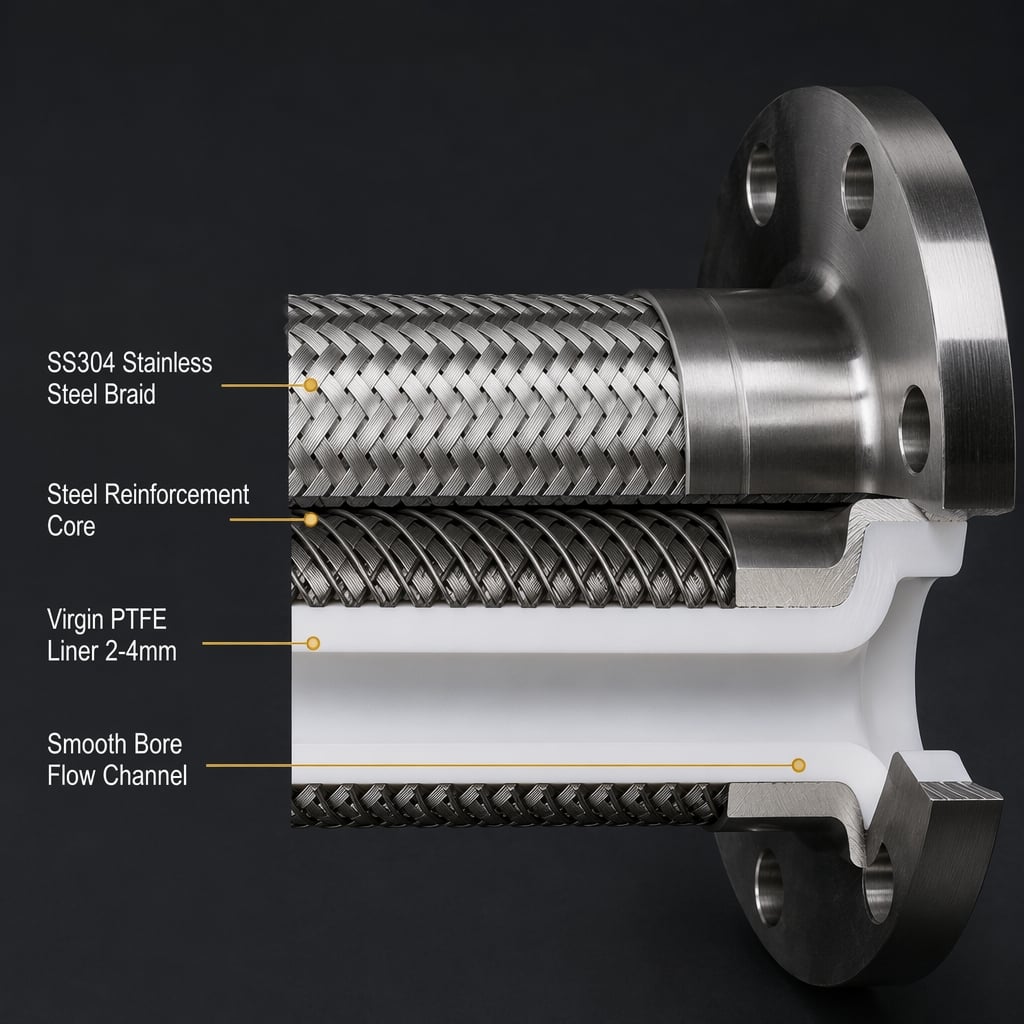
Start with the liner material — it determines chemical media suitability. Then the braid and flange configuration determine performance under pressure, temperature cycling, and mechanical stress in service.
The extruded thick-walled PTFE inner tube resists aggressive acids, alkalis, solvents, and high-purity media. The smooth bore prevents product build-up and contamination — critical for pharmaceutical and food-grade transfer lines. For PTFE lined metal hose applications, chemical compatibility must be verified independently from pressure rating. A high burst pressure rating does not carry over to chemical resistance — they are governed by separate material properties, and both must be evaluated for your specific media and service conditions.
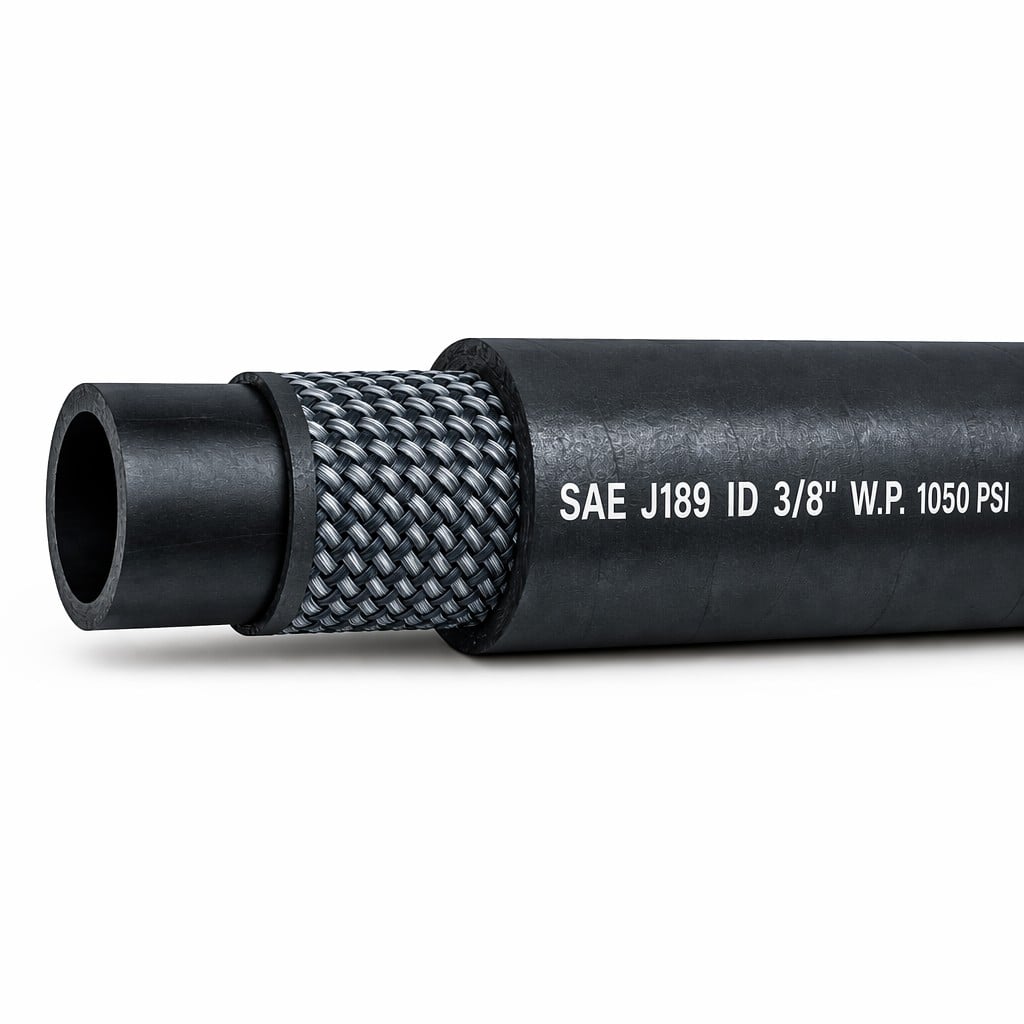
Dense 304 stainless steel wire braiding over the PTFE core provides high pressure resistance, burst protection, and mechanical strength for demanding industrial service. The key performance variable is braiding density and tension consistency — they directly determine how the hose responds under dynamic pressure cycling, vibration, and repeated stress in service conditions.
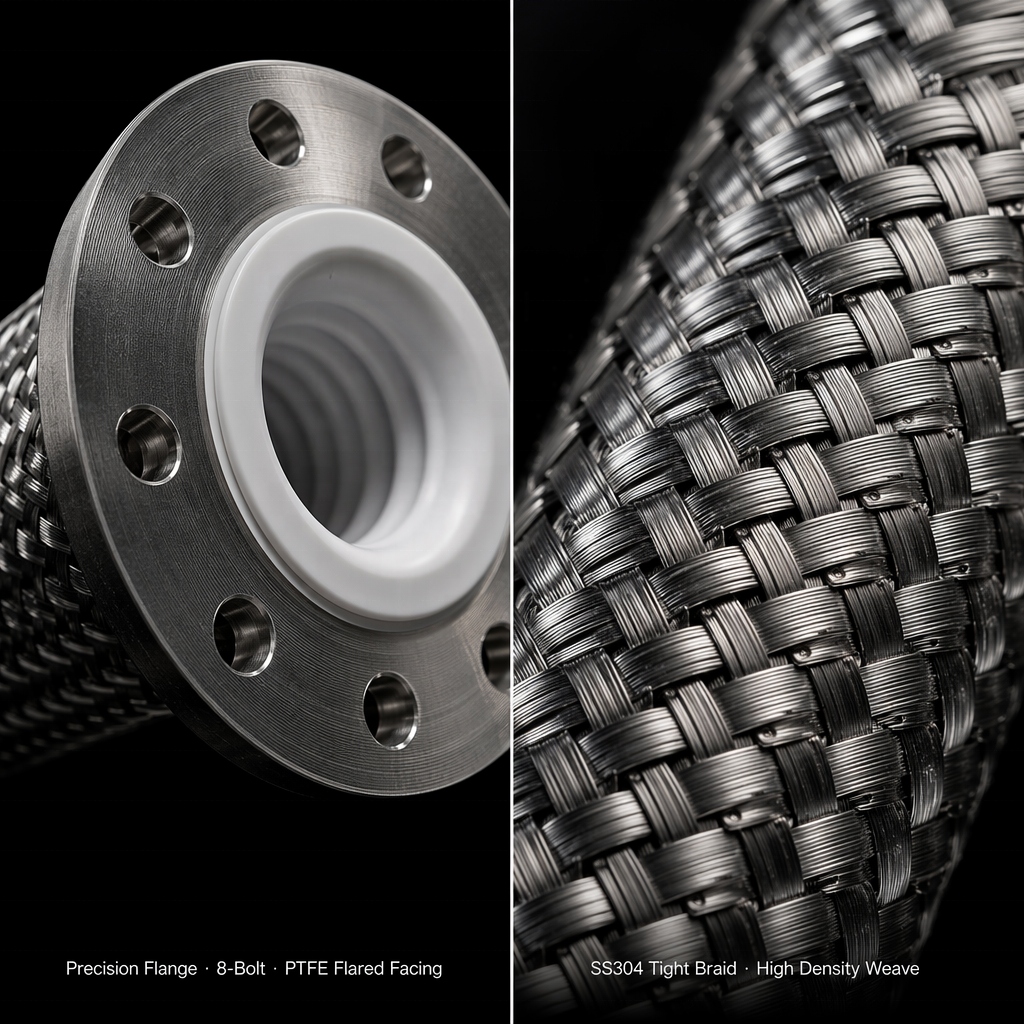
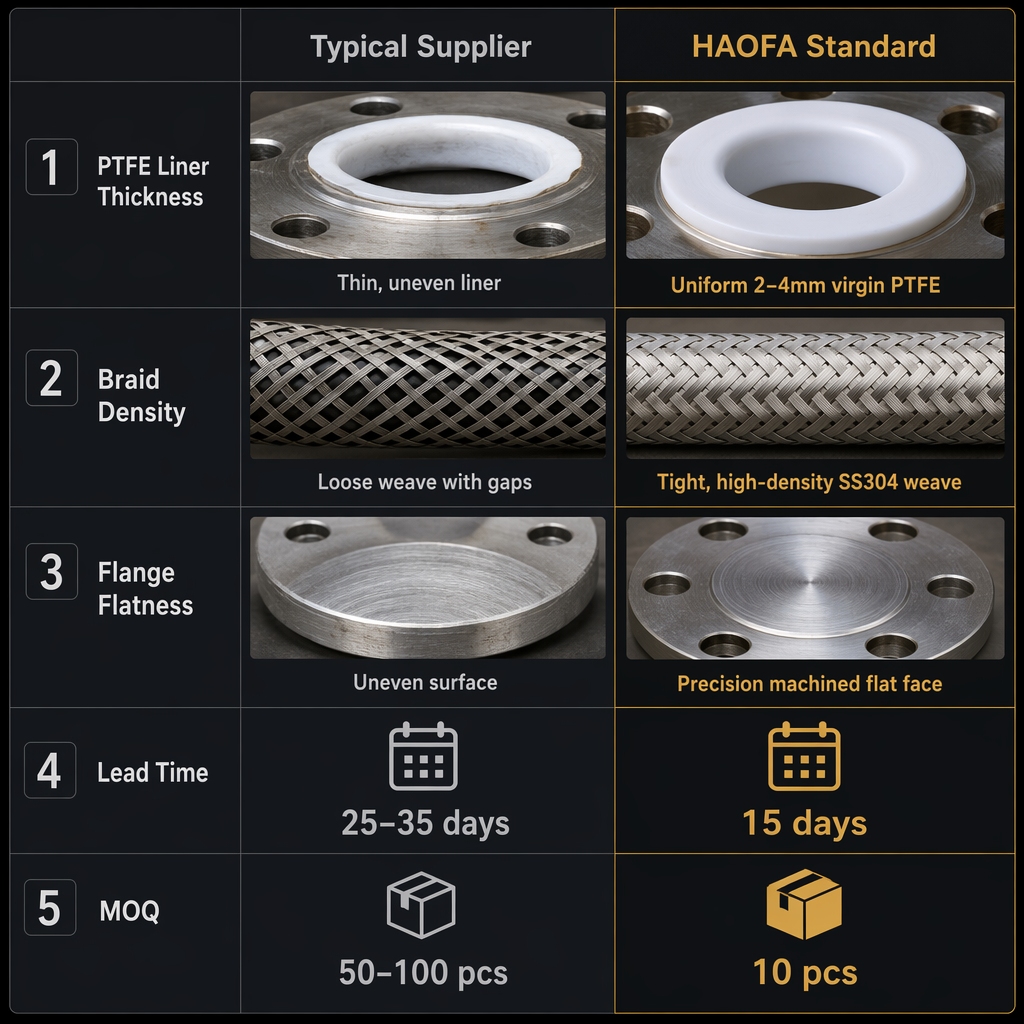
Carbon steel flanges are welded to the braided assembly with controlled penetration depth for secure, leak-tight connections. Full weld penetration at the joint is what separates a long-service flanged hose assembly from a premature failure point — the quality of the weld joint is as important as the liner material for reliable fluid containment.
The PTFE liner is heat-formed and flared outward to cover the flat face of the flange, creating an integral seal face against mating flanges. This eliminates the need for a separate gasket in most standard flanged configurations across ANSI, DIN, and JIS mating standards.
Extrusion, braiding, welding, and flaring are all performed in our own facility, from raw PTFE resin to finished assembly. PTFE lined metal hose fabrication quality varies between manufacturers based on liner extrusion consistency, braiding tension, and flange attachment quality — differences that affect hose performance under dynamic service conditions. In-house control means each assembly meets a consistent manufacturing standard throughout the entire production process.
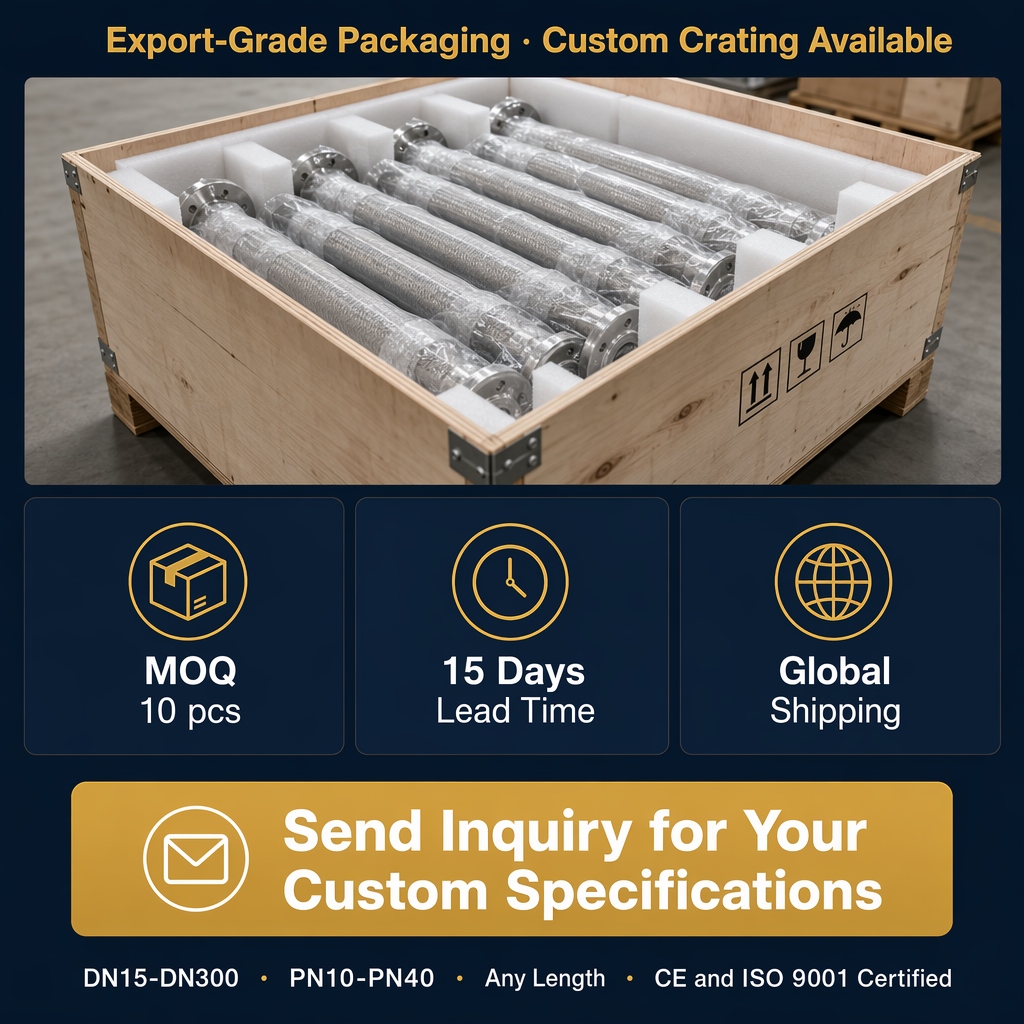
Hoses are produced to customer-specified lengths and flange standards including ANSI, DIN, and JIS. Custom inner diameter, outer diameter, OEM labeling, and packaging are available for distributor programs.
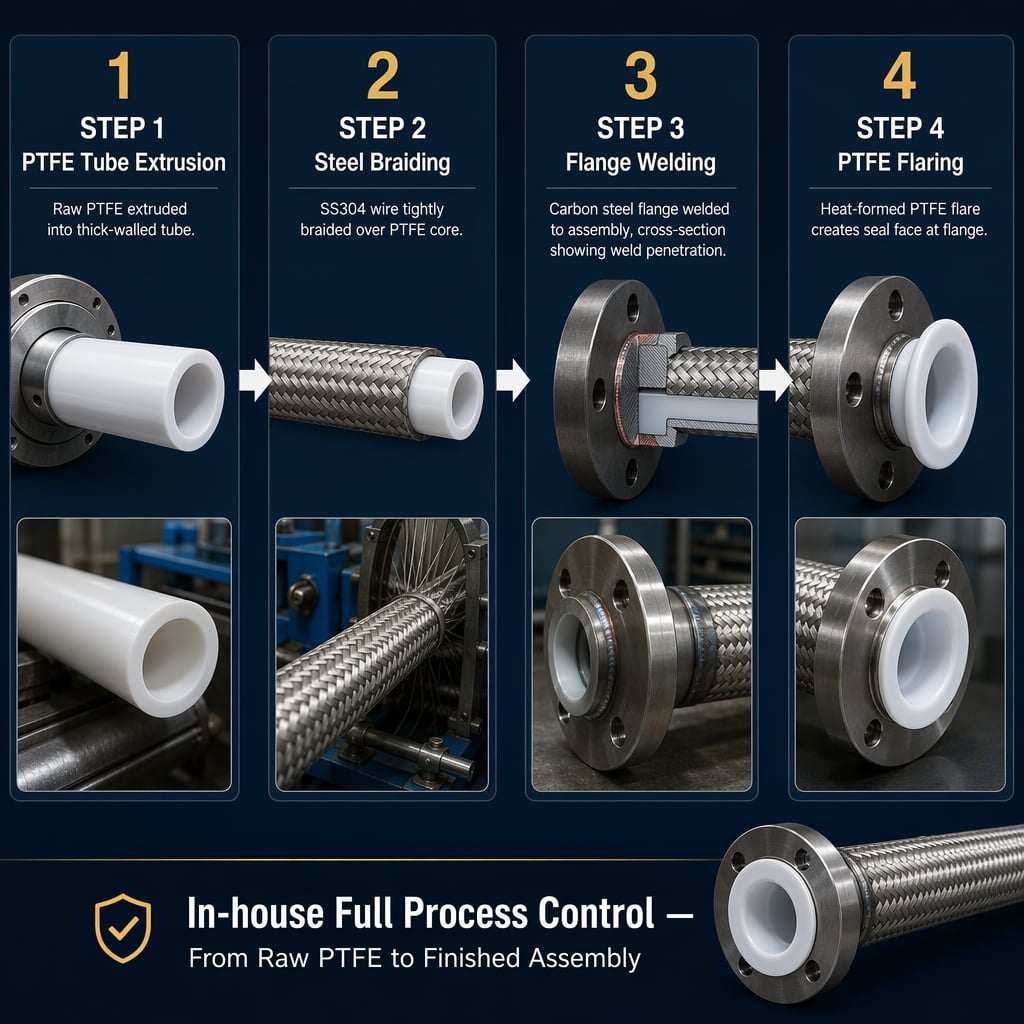
All flanged PTFE lined metal hose assemblies are produced through a four-step in-house manufacturing process:
STEP 1 — PTFE Tube Extrusion: Raw PTFE resin is extruded into a thick-walled, dense, void-free liner tube — the corrosion-resistant core of the hose assembly.
STEP 2 — SS304 Steel Braiding: SS304 stainless steel wire is tightly braided over the PTFE core, providing mechanical strength, pressure resistance, and burst protection under dynamic service loading.
STEP 3 — Flange Welding: Carbon steel flanges are welded onto the braided assembly with full weld penetration at the joint, ensuring a strong, leak-tight bond between flange and hose body.
STEP 4 — PTFE Flaring: The PTFE liner is heat-formed and flared outward over the flange face, creating the integral PTFE seal surface that seats against mating flanges during installation.
| Parameter | Details |
| Inner liner | PTFE (extruded thick-walled tube) |
| Reinforcement | 304 stainless steel wire braid |
| End connection | Carbon steel welded flange |
| Seal face | Heat-formed PTFE flare (integral) |
| Inner diameter | Custom — contact us for available sizes |
| Outer diameter | Custom — contact us for available sizes |
| Working pressure | Contact us for configuration-specific ratings |
| Burst pressure | Contact us for configuration-specific ratings |
| Operating temperature | Contact us for configuration-specific ratings |
| Length | Custom as customer demand |
| Flange standard | ANSI / DIN / JIS — custom per specification |
Dimensional and pressure specifications are confirmed per ordered configuration. Contact us with your system requirements for a complete technical data sheet.
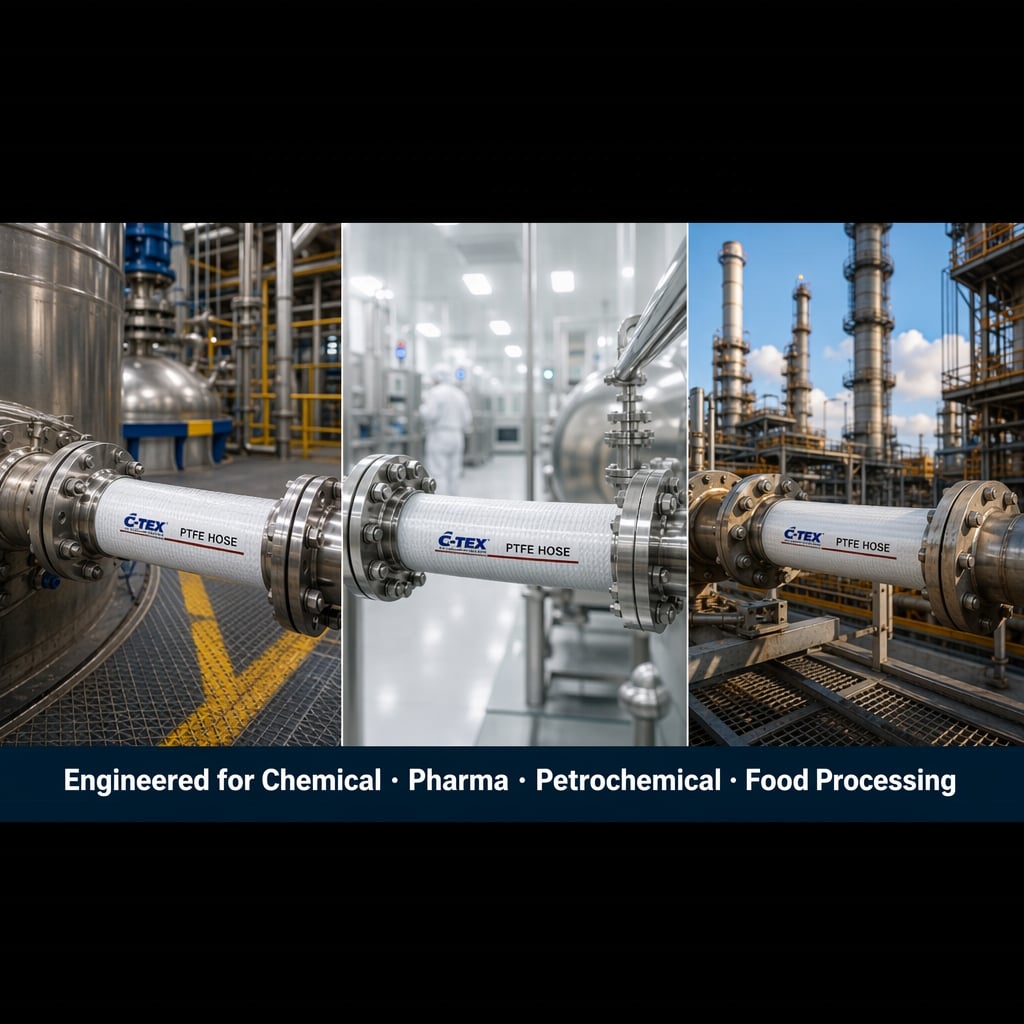
For chemical, pharmaceutical, and food processing service, PTFE lined metal hose provides the chemical inertness and leak-tight performance that standard rubber alternatives cannot match across all media and operating conditions. Choosing between PTFE lined metal hose and rubber comes down to flexibility versus chemical resistance — for aggressive media applications, the PTFE lined metal construction is the reliable choice.
| Option | Details |
| Length | Custom cut to customer-specified length |
| Flange size and standard | Custom per specification — ANSI, DIN, JIS available |
| Inner and outer diameter | Custom sizes available on request |
| Branding | OEM labels and custom packaging available |
| Documentation | Test reports provided upon request |
If your application requires a specific bore size, flange rating, or assembly length, contact us with your technical requirements and we will confirm available configurations.
PTFE lined metal hose fabrication quality depends on process-specific factors — consistent liner bond, full weld penetration at the flange joint, and controlled PTFE flare geometry — that go beyond raw material selection alone. In-house full process control means every manufacturing step from extrusion to finished hose assembly is performed and inspected within our own facility under a consistent quality standard.
For procurement teams qualifying a new hose supplier, structured test reports and material certification documentation are provided upon request to support your vendor evaluation process.
PTFE inner liner + 304 stainless steel wire braid + carbon steel welded flange, finished with a heat-formed PTFE flare seal face — full in-house process control from raw PTFE to finished assembly.