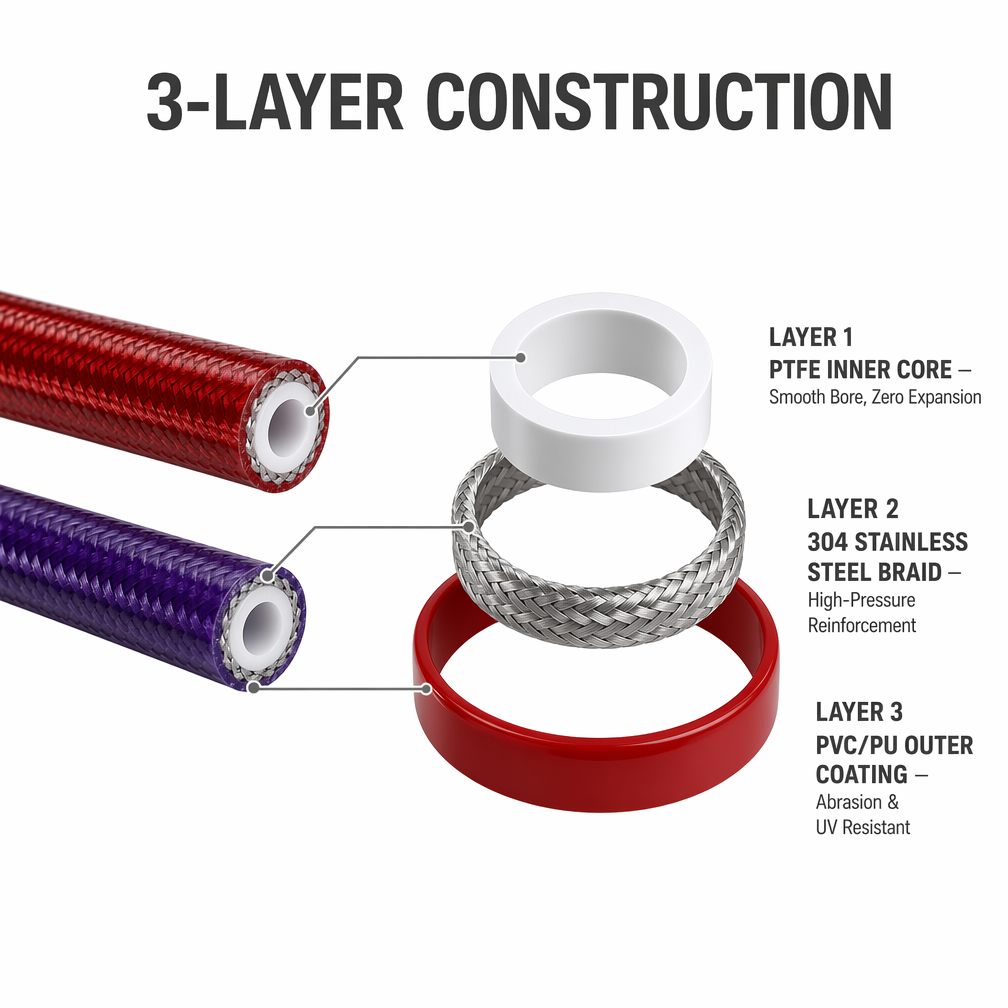
Selecting the right Teflon hose for industrial applications requires understanding the certifications and standards that ensure safety, reliability, and performance. A Teflon hose serves critical roles in fluid transfer systems, chemical processing, and high-temperature environments, making proper certification verification essential before procurement. Without the correct certifications, your operations face risks ranging from premature hose failure to regulatory non-compliance and safety hazards that could interrupt production or damage expensive equipment.
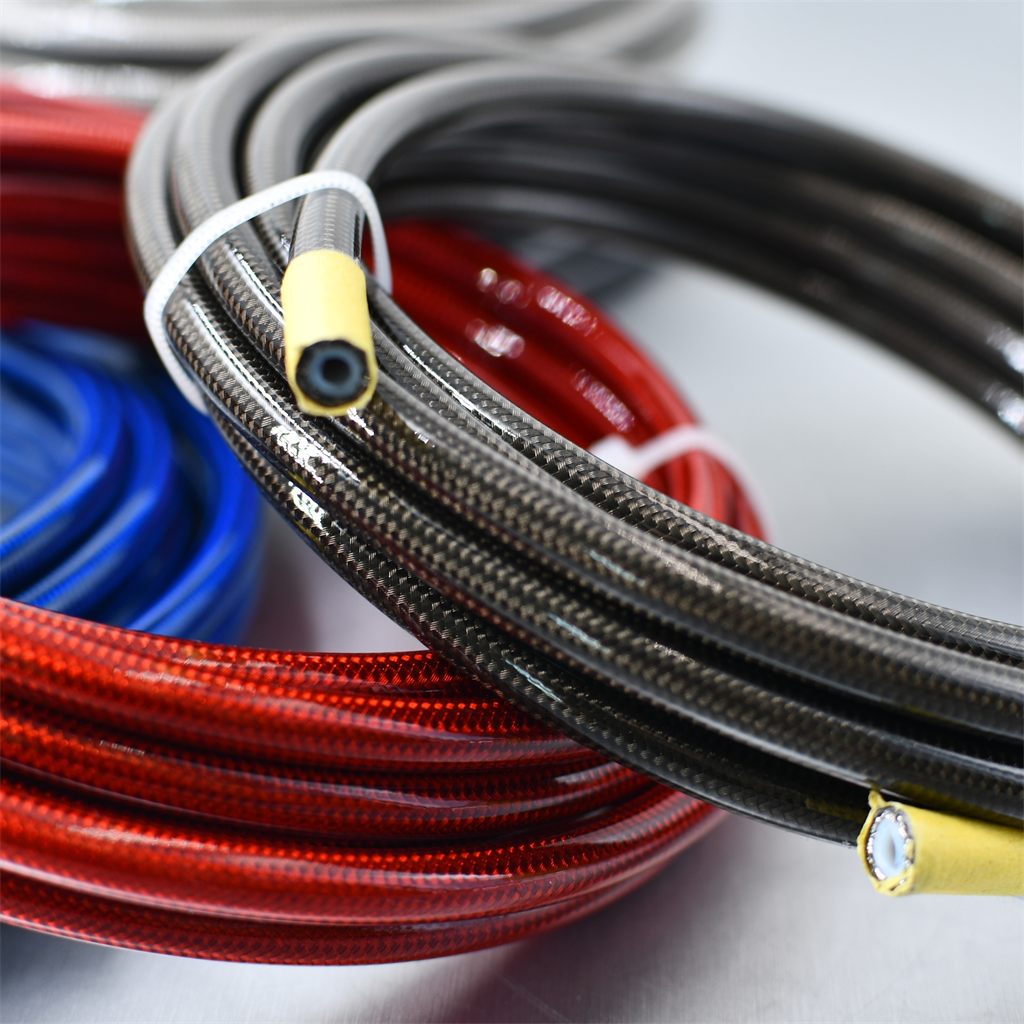
Understanding certification frameworks helps you make informed purchasing decisions and ensures your hose selection aligns with industry standards, regulatory requirements, and operational demands. This guide walks through the key certifications, quality markers, and verification methods you should evaluate when sourcing PTFE tubing or fluoropolymer hose products for your facility.
Industry Standards and Regulatory Certifications
International and National Standards
Reputable PTFE tubing manufacturers comply with established international standards that define material composition, burst pressure ratings, temperature limits, and safety performance. ISO standards, including ISO 1402 for seamless thermoplastic hose and ISO 6072 for fire-resistant flexible hose assemblies, provide baseline requirements for hose construction and testing. In North America, the SAE J518 standard governs hose fitting and performance, while ASTM standards address material specifications and chemical resistance properties of fluoropolymer hose products.
Compliance with these standards ensures consistent material quality, predictable performance under stress, and compatibility with common industrial fitting systems. When evaluating a Teflon hose supplier, verify that their products reference specific standard numbers in technical documentation rather than making vague claims about industry compliance.
FDA and Food-Grade Certifications
If your facility processes food, beverages, or pharmaceuticals, FDA compliance becomes mandatory. Chemical resistant tubing used in these industries must pass NSF International certification or FDA Title 21 CFR 177.2600 compliance, which certifies the hose for indirect food contact. These certifications verify that the PTFE material does not leach harmful substances into products, even under temperature cycling or extended service conditions that accelerate material degradation in lower-grade hose.
Many facilities overlook this requirement until audit time, then face costly product recalls or supply chain delays. Request third-party test certificates directly from manufacturers rather than accepting verbal assurances about food-grade status.
Material Composition and Quality Markers
PTFE Purity and Virgin Material Content
The quality of fluoropolymer hose depends directly on the purity and virgin content of the PTFE resin used in manufacturing. Premium-grade PTFE tubing uses 100 percent virgin resin and includes no recycled or regrind material, which improves chemical resistance, temperature stability, and long-term durability compared to blended formulations. Manufacturers should provide material composition certificates indicating resin origin and any additives or reinforcing agents incorporated into the hose design.
Certifications such as UL recognition or DuPont Teflon brand verification indicate access to quality base materials and adherence to rigorous manufacturing controls. When cost-competitive products cite vague or unavailable material specifications, chemical resistant tubing performance and lifespan often suffer despite initially attractive pricing.
Pressure Rating and Burst Testing Documentation
Legitimate manufacturers provide certified burst pressure test reports showing that each hose batch exceeds rated working pressure by at least four times the safety factor. This documentation typically follows ASTM D3752 or ISO 1402 test protocols, where hydraulic pressure increases until the hose physically ruptures. A PTFE tubing pressure certificate should list actual burst pressure achieved, test date, batch number, and the independent laboratory that conducted verification.
Suppliers unwilling to share pressure test data or offering only generic pressure ratings without batch-specific evidence suggest lower quality control standards. Your critical applications deserve hose with verifiable pressure margins that demonstrate manufacturing consistency.
Chemical and Temperature Compatibility Certifications
Chemical Resistance Verification
Chemical resistant tubing must be compatible with the specific fluids your facility handles, and this compatibility should be supported by technical documentation. Reputable manufacturers provide chemical compatibility matrices or swell testing data indicating how the fluoropolymer hose responds to hundreds of common industrial chemicals, solvents, and corrosive media. Certifications verify that the material maintains mechanical properties—such as tensile strength and flexibility—after prolonged immersion in aggressive chemical environments.
This testing protects against insidious failure modes where a hose appears intact but internal swelling or degradation undermines burst pressure rating. Request specific compatibility data for your process fluids rather than relying on general claims that the PTFE tubing suits chemical applications broadly.
Temperature Cycling and Thermal Stability Certification
Thermal cycling from extreme cold to high temperature causes repeated expansion and contraction that weakens hose connections and accelerates material fatigue. Proper fluoropolymer hose certification includes thermal cycling test results following ASTM D2143 or equivalent protocols, where the hose undergoes repeated temperature swings while pressurized. Documentation should confirm that burst pressure remains above rated working pressure and visual inspection shows no cracking, separation, or delamination after thermal stress cycles.
Without thermal cycling data, you cannot confidently specify chemical resistant tubing for applications involving batch heating, cryogenic exposure, or outdoor installations where ambient temperature varies significantly. Premium PTFE tubing manufacturers provide this assurance through certified test reports.
FAQ
What is the difference between PTFE tubing and PTFE hose assemblies?
PTFE tubing refers to the bare hose material in straight or coiled form, while PTFE hose assemblies include the tube, reinforcement layers, and factory-crimped fittings ready for installation. Assemblies add certified fitting quality and eliminate on-site assembly errors that could compromise pressure ratings. Certifications for assemblies verify both the tube material and fitting performance under combined pressure and temperature conditions.
Which fluoropolymer hose certifications matter most for general industrial use?
For non-food applications, prioritize ISO 1402 or SAE J518 compliance for pressure rating verification, UL recognition for electrical safety if applicable, and chemical compatibility documentation for your specific process fluids. Pressure test certificates and material composition data matter more than quantity of certifications. Verify these certifications are recent and come from the hose manufacturer directly rather than from obsolete or outdated documents.
How do I verify that a Teflon hose supplier's certifications are legitimate?
Request original test certificates from independent accredited laboratories rather than accepting copies from sales representatives. Contact the testing laboratory directly to confirm that the certification corresponds to the batch and size you are purchasing. Cross-reference ISO standard references and dates against current industry regulations to confirm the documentation reflects current compliance, since standards evolve periodically and older certifications may not meet current safety requirements for chemical resistant tubing.
 EN